Monday, December 12, 2011
Hello and Welcome
Hello and welcome to the Young Adult Literature Portfolio! Now you are reading this because of how the blog decides to arrange posts in order of the newest to the oldest, so I would ask you you place make use of the Table of Contents tab over on the right and use that to navigate through the blog. It will help you to approach the reading in the order that it was intended. Thank you and enjoy your stay!

An Analysis of Texts
Over the course of the semester we have had two major textbooks, the first being Teri S. Lesesne's Reading Ladders and the second being a packet of five chapters from as many textbooks. The two main textbooks have been further supplemented by topical articles that were handed out during the course of the class. Overall, I have to say that all of the material did a good job of presenting information to us, especially the packet of chapters which had to try and cover a number of subjects all very important to the field of young adult literature. The following is a brief analysis of each of these pieces and what elements made them successful and what about them are less than helpful, with the intent to guide others toward similar material for use in the classroom.
The first of our textbooks was Reading Ladders, again by Teri S. Lesesne, and this was actually not something that was used until about the middle of the semester. Unlike the packets that were collected and that dealt directly with the books one would encounter in the field, Reading Ladders was focused on helping to structure how students could engage in a series of works all with some sort of shared theme. The book started with why the field of young adult literature was worth pursuing, creating arguments for the value of the texts that fall under the category. Then came a chapter on the elements that play into how lifelong reader is built, followed by a chapter on motivating students to be readers, and finally how to bring it all together to turn students lifelong readers. The last three chapters finally got to the construction and implementation of the reader ladder methodology.
Reading Ladders works well as a guide for English teachers, because it gives compelling arguments for making use of YA lit, offers the strategies needed to try and create students who are going to be excited to read, and how to build them up and reinforce themes and lessons that will be important in understanding the structure of future books that can be encountered in later grade levels and in college. It is an easy read in and of itself, with Doctor Lesesne using a wonderful voice to hook the reader in and feel like she is talking straight to you. The information is clearly laid out and it quickly referenced, especially if you are the sort who likes to make use of sticky notes and highlighters.
As for the packet, I think this needs to be discussed on a chapter by chapter basis to get the most out of each piece. After all, these were not chapters pulled from the same text book and so they are going to each have a different feel. For reference purposes, I will include the title of the work and the chapter for others who wish to track down the texts being discussed. It should be noted that each of these chapters was used as part of a Socratic Seminar, as I discussed in a previous posting, and that these seminars would draw points from the text to support statements. The combination helped in enhance the conversation, though there were times when the group disagreed with the packets. Most notably, it was with the fifth section, on graphic novels, but I will speak more on that when I get to it.
First is Essentials of Young Adult Literature by Carl Tomlinson and Carol Lynch-Brown and it is the first chapter of the second edition. This section was set up to introduce the reader to the idea of understanding young adults and the literature that is aimed at them. It provides a nice historical point of view, including a timeline dating back to 1892 with the formation of the Committee of Ten and continuing to 1989 with publication of Weetzie Bat by Francesca Lia Block. The chapter makes a case for the value of young adult literature, much like Reading Ladders, and it is useful for getting a handle on the field. There are plenty of suggestions for good literature and the chapter is not too long, so it is good for someone who has to work quickly. This was a welcome addition to the packet and a good way to start things off.
The second piece of the packet is from Literature for Today's Young Adults by Alleen Pace Nilsen and Kenneth L. Donelson and it is the eighth edition. The reading is called “Contemporary Realistic Fiction: From Tragedies to Romances” and it is the fourth chapter of the book. The chapter is as long as the title and to say that this was something of a struggle to get through is being too kind to the chapter. The simple fact of the matter is that this chapter seeks to talk about every genre that is represented by YA lit and that means that it had to be long; in fact, having to use the entire chapter for a single discussion was less than ideal. This sort of thing is a short essay all on its own and should be treated that way.
Each section can help to inform the reader on the specific topics of young adult literature and there are a staggering number of suggested readings. It is a wonderful resource and if there is a chance to get the chapter on its own then I suggest you take it. It will prove to be a useful guide and can provide some books to get students started, while providing a starting point for further investigation in to the field. Connecting books that you like to others within the same genre is easy, using those suggested or by taking a couple of the ones you like and heading off to see what others on the Internet are doing with the texts. One thing that I would be remiss in not mentioning is that the tone of voice for the chapter is likable and so it does make the reading go down a little easier.
The third selection is from Young Adult Literature: Exploration, Evaluation, and Appreciation by Katherine Bucher and Kaavonia Hinton. This is another chapter 4, this one called “Protecting Intellectual Freedom” and we used it in our discussions on the importance of intellectual freedom and determining what should be available for students to read. Without going very far into that discussion, my class was heavily against any sort of censorship and believe that it was the responsibility of parents to tell students what they could and could not read and not the school. This overwhelming majority seemed to be something that Dr. Adams was less than thrilled with, because it kept us from considering the other side of the coin; ah, the utter assuredness of youth.
The chapter itself presents the issues revolving around intellectual freedom and the troubles that schools and teachers can face based on what is on their shelves, in the library and in the classroom, and the sorts of reading that teachers assign to their students. It is an interesting chapter that does a good job of informing the reader on what sorts of issues they can face as a teacher or librarian who is faced with this sort of thing, including the actions that schools may take, parental rights, a historical look at censorship, and the different ways in which access to materials can be controlled—this included things like censorship and the inclusion or exclusion of materials and the use of behind the counter books and restricted sections of the library. It is a good chapter for those who are interesting the issues at hand, as I am sure that this is something that all teachers will need to face at one point or another, and offers some good strategies on dealing with the situation. Certainly, this is a must for any library studies major.
The fourth section is chapter 8 of Literature and the Young Adult Reader by Ernest L. Bond and it focuses on poetry. I personally found this to be the second most interesting chapter of the book because, quite frankly, I am a terrible poet. This chapter goes over the importance of poetry in curriculum, the ways in which students and teachers can approach poetry, and the sorts of things that young adult readers would identify with in terms of poetry. It was a great chapter to use because it makes for a wonderful guide to the world of poetry and gives those of us who view it as a weakness a fighting chance at giving the genre the respect it deserves. The inclusion of poetry and suggestions for further reading were very useful here because, much like the other chapters, it provides a place for students and teachers to start. The examples are very helpful and can be good ways to enhance lessons all on their own. Make sure to take notes on the strategies that Bond employs in this work!
The final chapter is probably my favorite in terms of subject and it also comes from Young Adult Literature: Exploration, Evaluation, and Appreciation. This time it is done by Katherine Bucher and M. Lee Manning and it is the tenth chapter entitled “Exploring Other Formats: Comic Books, Graphic (comic-format) Novels, and Magazines”. If the title was not enough of a hint, the chapter takes a look at some of the controversies that surround the inclusion of comic books and magazines as part of the curriculum of a class. The chapter further explores the values of the medium, discusses some of the advantages that are offered as springboard to further reading, and suggested reading. Now as I said before, there was some interesting debate in the Socratic Seminar for this chapter, mainly focused on the use of comic books as a springboard to other forms of literature.
There was some discussion by the class as to whether or not the tone of the chapter was appropriate because, while it is offering reasons to make use of comic books and magazines in the classroom, it seems to still be treating the material as lesser when compared against traditional novels. As readers have no doubt gathered by now after reading through my blog, I am a big fan of the field and absolutely believe that this is a medium that is worth exploring. The interplay of words and pictures, the way they are drawn and colored, and the framing on the page all help to tell the story. There were those in the circle, myself included, who felt that comic books get a bum rap and they have a lot to offer. Those who doubt me should take a look at Batman: Noel, Asterios Polyp, The Watchmen, and The Sandman: Preludes and Nocturnes. Then we can talk about the merits of the medium.
Finally there were a number of supplementary articles presented throughout the course, but I have failed to keep a hand on any of them. I will say that, while I certainly agree that they are a great way to present an in-class reading and to find topical news stories and facts, there was not a whole lot that I found interesting in the articles that we read over the semester. In fact, I can only remember a few details about any of them. Now I think that has more to do with the nature of the class and the overall excellence of our reading packets; the news stories couldn't compare. I will say that one of the early articles did have an interesting exercise attached, where we were asked to look for flaws and inconsistencies in the story and tear it apart. It was a gratifying exercise and it felt good to know that the class had some very discerning readers.
And so those were the texts we covered. I hope that some of them have proven helpful to you and that you will find some good information if you decide to pursue them. Again, I heartily suggest that you take advantage of “Contemporary Realistic Fiction: From Tragedies to Romances” just for the shear number of books it presents and, if you are like me, the Poetry chapter is a good one!
The first of our textbooks was Reading Ladders, again by Teri S. Lesesne, and this was actually not something that was used until about the middle of the semester. Unlike the packets that were collected and that dealt directly with the books one would encounter in the field, Reading Ladders was focused on helping to structure how students could engage in a series of works all with some sort of shared theme. The book started with why the field of young adult literature was worth pursuing, creating arguments for the value of the texts that fall under the category. Then came a chapter on the elements that play into how lifelong reader is built, followed by a chapter on motivating students to be readers, and finally how to bring it all together to turn students lifelong readers. The last three chapters finally got to the construction and implementation of the reader ladder methodology.
Reading Ladders works well as a guide for English teachers, because it gives compelling arguments for making use of YA lit, offers the strategies needed to try and create students who are going to be excited to read, and how to build them up and reinforce themes and lessons that will be important in understanding the structure of future books that can be encountered in later grade levels and in college. It is an easy read in and of itself, with Doctor Lesesne using a wonderful voice to hook the reader in and feel like she is talking straight to you. The information is clearly laid out and it quickly referenced, especially if you are the sort who likes to make use of sticky notes and highlighters.
As for the packet, I think this needs to be discussed on a chapter by chapter basis to get the most out of each piece. After all, these were not chapters pulled from the same text book and so they are going to each have a different feel. For reference purposes, I will include the title of the work and the chapter for others who wish to track down the texts being discussed. It should be noted that each of these chapters was used as part of a Socratic Seminar, as I discussed in a previous posting, and that these seminars would draw points from the text to support statements. The combination helped in enhance the conversation, though there were times when the group disagreed with the packets. Most notably, it was with the fifth section, on graphic novels, but I will speak more on that when I get to it.
First is Essentials of Young Adult Literature by Carl Tomlinson and Carol Lynch-Brown and it is the first chapter of the second edition. This section was set up to introduce the reader to the idea of understanding young adults and the literature that is aimed at them. It provides a nice historical point of view, including a timeline dating back to 1892 with the formation of the Committee of Ten and continuing to 1989 with publication of Weetzie Bat by Francesca Lia Block. The chapter makes a case for the value of young adult literature, much like Reading Ladders, and it is useful for getting a handle on the field. There are plenty of suggestions for good literature and the chapter is not too long, so it is good for someone who has to work quickly. This was a welcome addition to the packet and a good way to start things off.
The second piece of the packet is from Literature for Today's Young Adults by Alleen Pace Nilsen and Kenneth L. Donelson and it is the eighth edition. The reading is called “Contemporary Realistic Fiction: From Tragedies to Romances” and it is the fourth chapter of the book. The chapter is as long as the title and to say that this was something of a struggle to get through is being too kind to the chapter. The simple fact of the matter is that this chapter seeks to talk about every genre that is represented by YA lit and that means that it had to be long; in fact, having to use the entire chapter for a single discussion was less than ideal. This sort of thing is a short essay all on its own and should be treated that way.
Each section can help to inform the reader on the specific topics of young adult literature and there are a staggering number of suggested readings. It is a wonderful resource and if there is a chance to get the chapter on its own then I suggest you take it. It will prove to be a useful guide and can provide some books to get students started, while providing a starting point for further investigation in to the field. Connecting books that you like to others within the same genre is easy, using those suggested or by taking a couple of the ones you like and heading off to see what others on the Internet are doing with the texts. One thing that I would be remiss in not mentioning is that the tone of voice for the chapter is likable and so it does make the reading go down a little easier.
The third selection is from Young Adult Literature: Exploration, Evaluation, and Appreciation by Katherine Bucher and Kaavonia Hinton. This is another chapter 4, this one called “Protecting Intellectual Freedom” and we used it in our discussions on the importance of intellectual freedom and determining what should be available for students to read. Without going very far into that discussion, my class was heavily against any sort of censorship and believe that it was the responsibility of parents to tell students what they could and could not read and not the school. This overwhelming majority seemed to be something that Dr. Adams was less than thrilled with, because it kept us from considering the other side of the coin; ah, the utter assuredness of youth.
The chapter itself presents the issues revolving around intellectual freedom and the troubles that schools and teachers can face based on what is on their shelves, in the library and in the classroom, and the sorts of reading that teachers assign to their students. It is an interesting chapter that does a good job of informing the reader on what sorts of issues they can face as a teacher or librarian who is faced with this sort of thing, including the actions that schools may take, parental rights, a historical look at censorship, and the different ways in which access to materials can be controlled—this included things like censorship and the inclusion or exclusion of materials and the use of behind the counter books and restricted sections of the library. It is a good chapter for those who are interesting the issues at hand, as I am sure that this is something that all teachers will need to face at one point or another, and offers some good strategies on dealing with the situation. Certainly, this is a must for any library studies major.
The fourth section is chapter 8 of Literature and the Young Adult Reader by Ernest L. Bond and it focuses on poetry. I personally found this to be the second most interesting chapter of the book because, quite frankly, I am a terrible poet. This chapter goes over the importance of poetry in curriculum, the ways in which students and teachers can approach poetry, and the sorts of things that young adult readers would identify with in terms of poetry. It was a great chapter to use because it makes for a wonderful guide to the world of poetry and gives those of us who view it as a weakness a fighting chance at giving the genre the respect it deserves. The inclusion of poetry and suggestions for further reading were very useful here because, much like the other chapters, it provides a place for students and teachers to start. The examples are very helpful and can be good ways to enhance lessons all on their own. Make sure to take notes on the strategies that Bond employs in this work!
The final chapter is probably my favorite in terms of subject and it also comes from Young Adult Literature: Exploration, Evaluation, and Appreciation. This time it is done by Katherine Bucher and M. Lee Manning and it is the tenth chapter entitled “Exploring Other Formats: Comic Books, Graphic (comic-format) Novels, and Magazines”. If the title was not enough of a hint, the chapter takes a look at some of the controversies that surround the inclusion of comic books and magazines as part of the curriculum of a class. The chapter further explores the values of the medium, discusses some of the advantages that are offered as springboard to further reading, and suggested reading. Now as I said before, there was some interesting debate in the Socratic Seminar for this chapter, mainly focused on the use of comic books as a springboard to other forms of literature.
There was some discussion by the class as to whether or not the tone of the chapter was appropriate because, while it is offering reasons to make use of comic books and magazines in the classroom, it seems to still be treating the material as lesser when compared against traditional novels. As readers have no doubt gathered by now after reading through my blog, I am a big fan of the field and absolutely believe that this is a medium that is worth exploring. The interplay of words and pictures, the way they are drawn and colored, and the framing on the page all help to tell the story. There were those in the circle, myself included, who felt that comic books get a bum rap and they have a lot to offer. Those who doubt me should take a look at Batman: Noel, Asterios Polyp, The Watchmen, and The Sandman: Preludes and Nocturnes. Then we can talk about the merits of the medium.
Finally there were a number of supplementary articles presented throughout the course, but I have failed to keep a hand on any of them. I will say that, while I certainly agree that they are a great way to present an in-class reading and to find topical news stories and facts, there was not a whole lot that I found interesting in the articles that we read over the semester. In fact, I can only remember a few details about any of them. Now I think that has more to do with the nature of the class and the overall excellence of our reading packets; the news stories couldn't compare. I will say that one of the early articles did have an interesting exercise attached, where we were asked to look for flaws and inconsistencies in the story and tear it apart. It was a gratifying exercise and it felt good to know that the class had some very discerning readers.
And so those were the texts we covered. I hope that some of them have proven helpful to you and that you will find some good information if you decide to pursue them. Again, I heartily suggest that you take advantage of “Contemporary Realistic Fiction: From Tragedies to Romances” just for the shear number of books it presents and, if you are like me, the Poetry chapter is a good one!
Strategies of Education
Throughout my semester in Young Adult Literature, we have been exposed to a number of different methods in which to engage in discourse with members of the class and to further expand on our knowledge of not only our texts but those read by our classmates. These major assignments and in class activities have proven quite useful as a future teacher not just for the benefit of understanding the field, but also as models for effective lesson planning. With that in mind, I wanted to share five of the major components to this semester's class in hopes that they would prove enlightening to readers and provide some ideas for assignments in the class room.
Literacy Narrative
The first major assignment of the semester was known as a Literacy Narrative and it was to encourage the students of the class to consider their reading history up to that point in their lives. The assignment is self-described as “nebulous” and provided a lot of direction for students to take the project. For my part, I decided to focus on how my interest in literature and how I have grown as an effective reader through the course of the class. My intent was to give Doctor Adams a look into where I was coming from so that she would understand my tastes in literature and perhaps explain some of my comments in class.
For instance, the first line of the second paragraph has me summing up my reading as such: “I think that this characterizes the bulk of my reading. Fantasy and sci fi novels that most would consider to be low art.” Through this, I was able to quickly size myself up for Dr. Adams as a student who reads a lot of what others might call less than gripping literacy; novel series like Jim Butcher's The Dresden Files and R.A. Salvatore's various Dark Elf trilogies. To balanced that out, I also made sure to include some of my thoughts on school reading and how things have changed for me as I have gotten older.
“I have read The Odyssey and Hamlet three times since middle school, each time I read them I grew to appreciate them more and more.” This is not some kind of idle boast or attempt to sound smart, because the purpose of the assignment is to be truthful not only with the professor but with yourself. In doing so, I felt comfortable sharing the sorts of school reading that I enjoyed and those that I didn't. So when I say “...whereas Catcher in the Rye and Lord of the Flies (both of which I still don't want to get near ever again, but probably should.)” it helps to establish what I have had trouble reading or did not enjoy.
This is the sort of thing that can really help to characterize a class for a teacher, giving insight into the personalities and reading habits of the students. With that sort of information, it becomes much easier to address specific needs of students and to provide potential revision to novel selections and assignment guidelines. If the entire class has trouble with boring historical fiction, they it is easier to adjust and make sure that choices for historical fiction and the attached assignments are more compelling. If one student has trouble with a book that has a lot of made up words, then you can warn them against choosing the text. This is the sort of assignment that, even if it is just a couple of paragraphs, can make a difference in setting up an entire course.
Reading Survey
The Reading Survey was just like it sounds, a self-generated questionnaire that we were to create, revise together in class, and then take out in to the world and collect a small amount of data with. Again, this was an assignment which was left fairly open for us to tinker with, as it was up to us to determine what it was that we wanted to know and who it was we were going to ask. In my case, I decided to focus on asking the middle school students in my neighborhood (there are a lot of them, including two of my younger siblings) about their reading habits and the things they liked and disliked about their English classes.
My questions included simple things like: “How many books did you read last year for your English class?” and “Do you do much out of class reading? If so, then what do you read? (Books, blogs, etc.)” This sorts of things gave a good baseline as to the immediate reading habits of the fifth graders in the neighborhood who were entering middle school and the eighth graders who would soon be leaving it. Other questions included “If you could make a change to your school reading list, then what kinds of books would you like to have added or removed?” and “Why do you think the books you selected should be added/removed?” to get the kids to think about their English classes a little more than they might normally have.
What I found in my answers was that there was nothing to characterize the students that I was interviewing. I am going to chalk it up to the pool of middle schoolers coming from too many backgrounds (eight grade or sixth grade, regular English for their grade level or IB English) and not having a large enough sample size. What I did learn was that it might be difficult to put all of the readers in a class under the same umbrella, especially at the college level, because they are going to be all kinds of students coming into the class. Those teachers at the sixth grade and ninth grade levels are sure to appreciate that idea, as they don't always know where all their new students are coming from in terms of elementary school and middle school.
Now I will say that this is an assignment that is going to take some tinkering depending on the grade level of the students. High school kids are going to be able to get much closer to the original guidelines for the assignment than middle school kids. So when adjusting the Reading Survey, keep that in mind. Perhaps younger students can ask their friends and family members about their reading habits, rather than strangers? This would help to give a teacher some insight into the reading habits of the family and peers of his or her students and help increase understanding about the student and his or her attitudes on reading.
Book Talk
The Book Talk is a classic example of a self directed assignment, despite having a fairly good set of guidelines to follow along with. The purpose of the assignment was to take a world suitable for young adult readers and present it to the class. There needed to be a visual element, we couldn't spoil the ending of the story, and we needed to get potential readers (our classmates) hooked. Afterward, we needed to answer any questions that the audience might have.
For my part, I covered The Sandman: Preludes and Nocturnes and any of you that have read through my summary of Maus will recognize the title. This is part of a long running comic book series that was started by Neil Gaiman (who also wrote The Graveyard Book, another of the books I summarized) and it tells the story of the lord of the realm of Dream, his imprisonment at the hands of a mortal cult, escape from captivity, and quest to regain his artifacts of power and his throne. Along the way, readers are shown just what the medium can do for a story, with interesting uses of art, color, frame layout, and other stylistic choices that inform that reader just as much as if they were watching a movie. Combined with allusions to works of literature and mythology, this is a smart read for a lot of students.
For an example of the work, take a look at some panels here and here. As you can see, there is a lot going on and some of the imagery is a little twisted. This is the sort of thing that fans of comics, Neil Gaiman, and Tim Burton would enjoy; though I do caution that you save this thing for high school students. Some of the themes are a little too out there for middle schoolers, especially the scene near the end of the book at the diner.
Socratic Seminars
Now I am sure that most teachers understand the value and structure of the Socratic Seminar, but I will provide a brief overview of the process as it appeared in our classroom this semester. The class was always split into two groups, but in different ways to increase the number of interactions and to help change up the discourse between students with each new session. The inner circle would start things off and would hold conversations on the current topic, which related to our text book, and then they would switch with the outer circle. The new inner circle could continue the original conversation or change directions entirely, at their discretion.
It should be noted that the outer circle was still involved, as they were supposed to keep track of what the inner circle was talking about, who was doing the talking, and offer constructive criticism and comments at the end of the session, right before the switch. This helped to keep the outer circle interested and to improve the overall discussion, as we learned what sorts of pitfalls to avoid.
When adapting this to a classroom, teachers really need to keep in mind that, while they are to stay hands off and let the students discuss, they should not be afraid to throw in a guiding question during a lull in the conversation. Also, teachers need to stay focused on who is doing the talking as much as the members of the outer circle, as there can be trouble with two or three members dominating the discussion with a topic they are interested in.
Topics covered in our class included issues of censorship, the use of comic books in the field, and various genre discussions. While useful in a broad class like YA Lit, other teachers should consider how best to tailor the seminar to match up with the current book or unit of study for that class. This method also works wonders in a social studies or history class, where controversial topics and interesting events can be explored in depth.
Discussion Board
The Discussion Board is a new tool for a lot of teachers and one that not all of us are going to have access to. With that in mind, the discussion board is a wonderful tool because it implements many of the same features of the Socratic Seminar. Throughout the semester, we were encouraged to get online and post in the discussion boards on our reading for the week and to ask others for clarification on events in the novels, discuss interesting themes that appeared, and further explore things that came up in the course of our seminars. Further, we were asked to do explorations into other genres and styles, such as book trailers and fan fiction, which could not be covered in the course of the regular lessons.
I have included some examples of insightful comments below, the first was a post the was from a classmate who had never read graphic novels before and is an example of what sorts of things that the medium can provide that makes it engaging to readers of any level and provides some interesting insight in to the feelings of the reader. The second is a question that came about after the poster had reader The Invention of Hugo Cabret and asked an interesting question relating the book to the myth of the titan Prometheus. The opportunities provided for engaging analysis by theses questions are a good example of the sort of discussion that can be generated by use of a message board.
“I have never had any desire to read a graphic novel and chose to read 'Yummy' this week. I chose it because I am intrigued by the gang life and what leads such young children to chose the gang life. 'Yummy' was a perfect portrayal of an 11 year old who felt like he had no one or anywhere else to go, besides to the gang. Without the visual aspect of this novel, I don't think readers would be able to see the tragedy from all points of view. The tragedy did not start when the young girl was shot, but back when Yummy was a child and he was being abused an bounced from home to home. Yummy was not some monster out to kill little girls, but a little boy himself, looking for love. After reading this graphic novel I am more compelled to read one on my own. It was still a difficult book to read since there was so much going on on each page, but overall the writer did a great job telling the story.” (Amanda Lorenzo, 2011)
“Did anyone else that read Hugo think that Selznick sort of interjected the Prometheus myth into the novel? It sort of seemed like an afterthought to try to add some depth to the story. Don't get me wrong, I really enjoyed reading this, but the myth seemed loosely related and maybe could have been incorporated deeper. What are your thoughts?” (Michelle Jones, 2011)
The Giver by Lois Lowry
A Brief Summary
The Giver is set in an unknown time and place, in what appears to be a utopian society where there is no hunger, no disease, and a community that cares for its members. The main character is a boy named Jonas, who is twelve years old, and it is through him that the reader is first introduced to the various elements of the utopian society and the importance of the upcoming ceremony that will see Jonas assigned to his role in the community. It is at the ceremony that he is selected for a great duty: To become The Receiver. Jonas learns that his duty is to receive the memories of life held by the current Receiver, now called the Giver, and that he will advise the community on the best course of action by being able to sift through the collected memories.
As Jonas begins to undergo his training, the reader realizes all that is missing from his life in the supposed utopia. We learn of the way in which emotions are suppressed, how there is no color or difference, and the horrible things that go on in order to ensure of a “perfect” society. As Jonas learns of love and war and color, the reader comes to see all that is so very wrong with the community. Eventually, Jonas must make a decision as to whether he can bear the responsibility of being the Receiver or if maybe there is another way to live.
Thematic Elements
The Giver has all the elements that are present in most utopian and dystopian fiction, juxtaposing the two and challenging the reader to decide whether or not the community that Jonas lives in is worth the price that the citizens unknowingly pay to enjoy the comforts that it provides. The importance of differences and emotions are central to many of the events in the novel, as these are the two things missing the most from the community.
Analysis
The Giver is a pretty easy read and should be suitable for students at the sixth and seventh grade level, as they should have no trouble reading the book and picking up on the themes at work. Teachers should help guide them to the deeper questions, to avoid students seeing things as black and white (pun fully and unapologetically intended) and force them to consider whether or not the community where Jonas lives is a utopia or a dystopia. After all, the majority of the residents are ignorant to what they are missing out on, but they believe that they are happy with the equality they live in. Jonas' views on the community he lives in, seeing as he is the main character, will color the reader's interpretations and students need to be reminded of the other elements at work.
A Little Something More
The Giver is a good way to start a unit of dystopia, leading into other classic works of dystopian worlds like George Orwell's 1984. Teachers should look to connect the two together to maximize the effects of both books, though the latter does have a higher reading level. The Giver is a good first step and, even if it is not going to be used as part of a larger unit, it makes for good independent reading. If your course does not intend to teach other works of dystopian literature, then at least give your students a leg up by preparing them early with this book.

Maus by Art Spiegelman
A Brief Summary
Maus: A Survivor's Tale is unique from the other books mentioned so far because it is, in fact, a graphic novel. Also I should say that this is only the first volume of Maus, subtitled My Father Bleeds History, while the second is subtitled And Here My Troubles Began. Maus follows a pair of time lines, the first being Art's interviews of his father Vladek and the second being the stories themselves. Through the stories, the reader comes to see the early events that would later lead to World War II. The initial gains by Nazi Germany, the ways in which Jews were forced to hide and try to survive in a place that wanted them gone. Vladek and his family go through much, narrowly avoiding catastrophe from most of the first book, and only at the end being caught and sent away to Auschwitz. That is where the second volume picks up on the action.
Aside from the tales of Vladek's life in Poland and his trials and tribulations, the reader learns more and more about his interactions with Art, his first wife (Anja), and his second wife (Mala). Vladek is only human after all (though he is a mouse in the narrative, just like all the other Jews.) and Art has to come to terms with his father the the events of their lives. Anja's suicide and its effects on Vladek and Art are explored during these sections, as are Mala's interactions with Vladek and how their relationship is. This moments do a wonderful job of capturing the feeling of humanity, both good and bad, and how even people that we love are as flawed as ourselves.
Thematic Elements
Terror and suspense are the name of the game for large sections of the historical accounts in Maus, as Vladek and his family have to evade capture by the Nazis and attempt to make a life for themselves under less than ideal conditions. In the present day, there are elements of discovery and family, as Art tries to learn more about his parent's time under Nazi rule and to learn something of his family history. The dysfunction between him and his father, between his father and his mother, and between his father and Mala all play a counterpoint to the love and friendship they may show to one another at different points in the narrative.
Analysis
Maus is exceptionally good, with a wonderful use of art to support the dialogue. While students are going to need some instruction in the best way to read a graphic novel (as they have to get used to reading the text, looking at the art, and considering the arrangement of panels on the page) this is something that students from sixth grade on up to seniors in high school and read and enjoy. There is a lot there and the read is not as fast as it might seem, as special attention needs to be given to arrangement and style. The use of a single animal to represent all members of a nation (which Art uses to characterize just how absurd it is to portray the people of a culture as all looking the same) being one of the more telling features.
A Little Something More
Maus is ideal for two kinds of units, those that focus on World War II or the Holocaust (much like The Book Thief despite their wildly different approaches and styles) and for a unit that focuses on the ways in which graphic novels serve as a valid medium for telling stories. As most teachers are going to have a fair bit of experience with the former, I will be focusing on the latter. Graphic Novels are a unique form of entertainment, because of the way that they blend art and word together—not unlike The Invention of Hugo Cabret, which would make for a good companion piece in such a unit. Their unique elements make them suited for telling stories both in the fashion of books and the style of movies, meaning that a lot of attention has to be spent on both aspects. Maus is a good first introduction to the unit, as it does not go overboard with the possibilities of the medium. For that, books such as Sandman: Preludes and Nocturnes would be the graphic novel of choice.

Sold by Patricia McCormick
A Brief Summary
Sold is a book written in verse, though the form can change from section to section, which follows the story of a young girl named Lakshmi. Lakshmi is a peasant girl from a small village in Nepal, where her family is very poor, as are many of her neighbors. There are many simple joys and heartaches to Lakshmi's life, like her stepfather who gambles what little money the family has or her dreams of marrying one of the local boys. This changes for Lakshmi when a monsoon tears through the village, leaving their crop ruined and the family in dire straights. It is here that Lakshmi volunteers to serve as a maid in one of the rich houses in the city, as one of her friends before her has done, and bring money to the family that way. What happens instead, is that Lakshmi's stepfather sells her into sexual slavery without her knowing.
From there, Sold takes on a different tone as Lakshmi struggles to survive in her new environment and dreams of one day returning to the mountain she calls home. Along the way, she meets other members of the pleasure house that she has been sold to and learns of the ways in which they survive and even raise families. Things come to a head when the chance for freedom presents itself and Lakshmi has to decide if she is brave enough to try and escape this world she has been sent to.
Thematic Elements
Sold has strong elements of culture shock, isolation, despair, and hope. The reader really does have to adjust to the differences between Lakshmi's beliefs and their own, which can be difficult, given how drastically different it is from what most American readers would consider the norm. Lakshmi herself has to adjust in such a manner after she leaves her home in Nepal and is sold to the pleasure house. Life at the pleasure house is a strange twist of despair and hope, as the residents are friendly to Lakshmi, but she still struggles with the desire to return to the way that things were before she came to such an awful place.
Analysis
This is a book for more mature readers, as the content is not necessarily graphic but is very suggestive. Lakshmi and the other women of the pleasure house are slaves, pure and simple, and their bodies are being violated. Senior readers are capable of handling the book's seedier elements, though a case could be made for Juniors reading the text. Overall, this book is a gripping (and deceptively fast) read, but the content is what needs to be evaluated.
A Little Something More
Sold would be right at home in any unit involving civil rights or world cultures, as it has elements of both in the narrative. It could also be an interesting read in a class that is focused on a woman's role in history across different cultures, as Lakshmi's beliefs regarding her place in her culture are very different from what we as Americans would believe. It is for this reason that it would make a fine addition to such a reading list, as it challenges ideas of what it means to be a powerful woman. (And Lakshmi is assuredly powerful, for her ability to endure and survive in the pleasure house.)

The Invention of Hugo Cabret by Brian Selznick
A Brief Summary
The Invention of Hugo Cabret opens in Paris, France in 1931 and the reader is introduced to the title character only through the opening pictures. In fact, the book blends together the narrative with pictures in a way that is seamless. We are introduced to our other characters and the set up of the plot through some of the opening activity, in which Hugo is caught trying to steal a wind-toy from the owner of a toy stand within the station. Through the course of the opening of the narrative the reader is introduced to Hugo and his role at the train station, where he lives with his drunk of an uncle who has gone missing. Hugo runs around the walls of the station, keeping the clocks there in working order so that no one will notice his missing uncle and he will not lose his small living place in the train station and the freedom of coming and going.
For you see, Hugo and his late father before him have possession of an interesting artifact: An automaton with a pen in its hand. Hugo believes that he can repair the machine, so that it can write out its final message from his father (who died in a fire while working on the automaton), and it is this task that brought him to the toy stand, for parts. Hugo is soon indebted to the toy maker and things begin to get exciting as Hugo attempts to learn the secrets of the automaton, to toy maker, and keep some memory of his father alive. All the while, the reader slipping in and out of the narrative and the illustrations that blend together and bring Hugo and his world alive.
Thematic Elements
The Invention of Hugo Cabret has some interesting themes involved, but one of the most powerful (and one of the ones that seems to be the most recurring within young adult literature) is that theme of family. Hugo has lost his father and his uncle has now disappeared too, so he really does not have much in the way of a family, and his interactions with the toy maker Papa Georges and Isabelle—the girl who we first spot at the beginning of the narrative. There is also a theme of hope and reconciliation, with the automaton representing Hugo's fractured life and search for some relief from the pain of the loss of his father.
Analysis
I believe that this text is more than suitable for students in sixth grade and that it continues to be a good choice for independent reading afterward. There is a lot to explore with the structure of the book and how the text and the illustrations work with one another. Teachers should pay special attention to the subtle details of expression and draw attention to it with in-class discussions and assignments.
A Little Something More
The Invention of Hugo Cabret is the closest thing that most school curriculum will come to making use of a graphic novel in their classrooms and that is just a shame; so perhaps that should be rectified. This book fits well into a unit that wants to explore the other forms of literature aside form novels. This book is entirely unique in my experience due to the way it employs its illustrations and it could be connected to more classical uses of illustration (which merely accompanies the text and does not replace it) and with graphic novels that make more use of their art rather than their words to tell a story.

Looking for Alaska by John Green
A Brief Summary
Looking for Alaska starts off with the main character, Miles Halter, coming to an Alabama boarding school, Culver Creek Prepatory School, from his home in Florida. Readers will immediately notice that the book is seperated into two sections, one called “Before” and the other called “After”. The beginning of each chapter has a countdown to the next section or a countup from the event that causes the switch. The reader is also given a nice long look into Miles' personality, establishing some of his little quirks and generally getting to known him. Afterward, Miles quickly gets introduced to his roommate Chip Martin, an older student and resident of Culver Creek. Chip further introduces Miles to his friends, the most interesting of which is the titular Alaska. It should be noted that, soon after the characters meet, they rarely use their names. Miles will go by the name Pudge, despite the fact that he is built like a bendy straw, while Chip is known as The General. The stories behind these names are amusing and endearding, something that is important to the later half of the narrative for many reasons.
The first half of the book follows Pudge's experiences as Culver Creek, as he learns more about his new friends and the local social order. Readers get to know his teachers and things are fairly normal for a slice of life piece. It is only when things change and the book enters the second section, the After, that things become wickedly dark. Pudge and The General become obsessed with their search for answers, for the right questions, and for some sort of hope.
Thematic Elements
Looking for Alaska has strong elements of growth and development that are common with teenage novels, at least in the Before section of the book. The running theme is more of youthful innocence and discovery than anything else. The reader goes through many of the same sorts of themes as were present in The Perks of Being a Wallflower, such as being the new kid at school and discovering how one fits in. In contrast, After changes the game up entirely and the theme shifts to the darker questions about life and human purpose. The themes become more about obsession and the burning need to know; I would say more, except that it would be giving too much away.
Analysis
Overall, Looking for Alaska is a good book, but it hits the reader hard if they allow themselves to get attached to the characters. (Which they should be doing, as that helps to convey more about them and about the author's intent.) The themes are definitely more adult than some of the other books that you will find listed on the blog and this reading should be kept for those at the Junior and Senior levels of High School. Unlike Perks, which allows younger readers to connect well with the feeling of being the new kid, Looking for Alaska has a greater emphasis on growth and coming to accept the facts of life.
A Little Something More
Looking for Alaska is a little harder to connect with the other books that you will find on the blog because it has a feeling of being unique by comparison. It could be connected with other stories of life and loss, but this is not a common topic for most school cirriculum. Rather, this book should be encouraged as a good out of class reading for those students who are looking for something that is a little more adult. It works well as an independent reading project and its author is easily available through YouTube where he is active in the VlogBrothers project with his brother Hank and Don't Forget to be Awesome records.

The Lightning Thief by Rick Riordan
A Brief Summary
The Lightning Thief follows the story of Percy Jackson, a kid who has all sorts of problems in school and at home. He suffers from dyslexia and ADHD, he constantly gets kicked out of the boarding schools that his mother is sending him to, he does not know his father, and his stepfather is a jerk. He is the most unlikely of heroes, at least until his history class takes a field trip to the local museum. The events in the museum soon make it apparent that Percy's world has a lot more to it than either Percy or the reader first guesses.
Following events that bring him to a place known as Camp Half-Blood, the home of children who are part human and part Greek God, Percy begins to discovery previously unknown powers and abilities. There is a whole world out there that he never recognized, filled with the monsters and legends of old, and some of them want to kill him; thankfully he is safe inside the Camp. He finds himself growing happier as he makes new friends and comes to find those who are accepting of him. Things will change as the secrets of his parentage are revealed and, soon enough, he is launched into a quest to save the world from a coming war.
Thematic Elements
There many of the classic themes of adventure inherent to Greek Myths and tales in The Lightning Thief. The book follows the heroes journey in a way that many experienced students of reading will recognize, as much of the stories that no doubt served as inspirations did. The themes of identity and coming to ones true power are also common throughout the narrative. The book is only the first in a series, however, so it should be noted that the other tales in the series are not necessarily the same as this one. I have not yet read the rest of the books and so it is impossible for me to give even a passing comment to each of them here.
Analysis
The Lightning Thief can serve wall as a dip into the realm of Greek myth, despite any small liberties the author may take with the source material, and is a perfect way of introducing middle school students to the genre. It has many of the classic elements, as I said before, and many allusions that can be used to connect the work to other stories that students might have already heard ot. Those who like the Harry Potter books would almost assuredly find something to like in these books, as it has a lot in common with the first three books in the series in terms of tone and the journies of the protagonists. The classic hallmarks of Greek myth, such as the monsters and the quest for identity, make this a good book for any reader however, so don't let the simplistic style give you away if you are above the age that you would be attending middle school.
A Little Something More
As I just said, this book is very traditional in the way it presents itself, so it makes a good first step on a reading ladder that will lead to books like The Odyssey or The Iliad. Teachers should consider this a must if they are going to be doing an extended unit, especially if they are like my teachers and will be using The Odyssey as part of their standard curriculum for sixth grade students. The reading level is much easier and it allows for students to draw connections between the two books, especially with the Lotus Hotel chapter, once they have completed both of them.

The Book Thief by Markus Zusak
A Brief Summary
One thing needs to be made clear right off the bat, The Book Thief is narrated by Death and not by the main character; his point of view will be much as an outsider looking in and this is going to be the view that students take with the text. This has the wonderful benefit of giving some connection with the narrator, as Death is telling the reader a story and injecting his own unique views on the matter.
The Book Thief opens with Death's narration, introducing himself, explaining the importance of colors, and giving the reader an overview of the major events in the life of the book thief (a young orphan girl named Liesel Meminger) which he was present to witness. The means by which Death knows the things that happen in between are established in the form of a book that he finds, belonging to Liesel, and the reader is given the basic structure of the book. The book is divided into parts, which are further divided into chapters, and the page labeling which part of the book the reader is currently in will give hints as to the subjects of the chapter. (This should make it easier to break down, if being used as part of a class.) After the opening introduction the book properly begins with Chapter 1.
Liesel Meminger is traveling with her mother and her sickly younger brother aboard a train, heading to the town of Molching. Her brother dies during the trip, the first death that Liesel has ever experienced, and they are forced to stop in town to have the poor boy buried. It is here that the first of the book thief's prizes are taken, in the form of a book full of instructions for gravediggers. She pockets the item, keeping it safe for herself as a reminder of her brother. From there, Liesel and her mother arrive in Molching where Liesel is given to Hans and Rosa Hubermann. These are her new foster parents, with Hans being a sweet father and Rosa being a horrendous mother who swears worse than any sailor. Thankfully, these characters avoid becoming one dimensional, as there is more to them that these initial traits and they both prove to be good parents, for the most part.
Action in The Book Thief continues as Liesel grows up in town, with a lot of focus being put on how she comes to learn her letters and become literate and on the people that she encounters in the town. From the rapscallion Rudy Steiner to the strange Ilsa Hermann, the mayor's wife. Events unfold and things become serious when Max Vandenburg, the son of a Jewish man that Hans knew during World War I, comes to the Hubermann household. It is a definite shift in the book, as things begin to grow steadily darker for Liesel after Max's arrival and as the second World War drags on.
Thematic Elements
The Book Thief is a thick book, with a whole lot to say, and it is easy to find any number of potential meanings in the text. One of the major themes are the importance to literacy, which is a driving force of Liesel and her actions as the book thief. Others include value of family and friends, the nature of people, and the effects of poverty on those that are poor and being oppressed. The latter is subtle, but important, as it stands as a reminder that not every German was a Nazi (in fact, Hans refuses to join the party despite the words of his son) and the effects of war on this small town. There are other elements, to be sure, but those are some of the most evident and, I believe, some of the most important.
Analysis
The Book Thief is unlike most books that most students will have read, perhaps unlike any book they have read, and I feel that that needs to be stated before getting into a summary of events. A teacher looking to use this book is going to have to take the time to read it and really get into the bits of it. This was published as a work of adult fiction in its native Australia and it is deserving of the title, it is challenging and one of the finer pieces of literature to be produced in the last decade. Students at the high school Junior and Senior levels should be able to handle it, but they are going to need your help. It is a rewarding read, but it takes some effort to understand what is happening and to connect the events as they unfold.
A Little Something More
If a teacher is looking to make use of The Book Thief in class then it will be easy enough to fit it into a history unit that deals with World War II, the Holocaust, and a unit that deals with how things look from a different point of view. Seeing as the main character is German and not Jewish, it adds an interesting shift the usual feel for these sorts of books. It combines well with Maus, despite the latter being a graphic novel, if you decide to use the work as part of a WWII/Holocaust unit. Otherwise, this is a good read for any advanced readers in your classroom, if you feel like giving them a challenge for their next independent reading assignment.

The Graveyard Book by Neil Gaiman and Dave McKean
A Brief Summary
The Graveyard Book opens with the murder of a family in their own hom and a few dark illustrations to supplement the opening feelings of dread and danger. Someone called “the man Jack” is creeping around the home of the family that he has just slaughtered, looking for one wayward member that he is missing, a baby boy. The first chapter follows the baby as he crawls from the house where his family is killed and wanders uphill to the local graveyard, with the man Jack following the trail soon after. Once at the graveyard, he is rescued from certain death by the spirits who inhabit the place, two of which take him in as their son. They give him the name Nobody and he adopts the family name Owens, officially falling under the protection of the graveyard and its residents.
After the tense opening, the narrative focuses on Nobody as he grows up in the graveyard and on how the ghosts who live there shape his development. The reader watches as he becomes a small child, then a boy, and finally to the point where he is almost a young man. Along the way he develops odd powers, meets with the strange and varied entities of the graves, and learns all the usual things that one would expect a child of his age to be learning, and some things that most would not. Through it all, Nobody begins to learn of the man Jack and the secret behind his attempted murder. It all leads to a thrilling ending that surprises even astute readers.
Thematic Elements
Much like The Perks of Being a Wallflower, there are elements of a coming of age story in The Graveyard Book, but they are downplayed compared to the supernatural occurrences and the theme of family and the bonds that relations create with one another. Nobody Owens hardly lives a normal life, but it can be said that he is well cared for by his extended (and deceased) family. There is also a theme of mystery and conspiracy in the novel, though it is understandably juvenile by comparison to most texts that adult readers would pick up.
Analysis
The Graveyard Book is a suitable book for middle school students who are looking for an exciting read, which the quality assurance that comes from knowing that Neil Gaiman was responsible for the story. It works well as a way to get students interested in spooks and spells into reading and can serve as a fun read around the Halloween season. Otherwise, there is not too much in here that would challenge readers.
A Little Something More
If a teacher is interested in making use of those book in his or her classroom, then I suggest that they do so as part of a larger activity where students are allowed to select a book for themselves. There are not many challenging themes in this book, which makes it a good pick for reluctant readers, and the art helps to add to the reader's imagination. Those teachers looking to connect it to a larger unit should focus on the elements of family represented in the text, looking to that fact that Nobody does not view his ghostly relations to be unusual at all. Connections could be made to families throughout history who have been judged as non-standard, such as mixed race couples and those who are homosexual.

The Perks of Being a Wallflower by Stephen Chbosky
A Brief Summary
A Little Something More
The Perks of being a Wallflower beings when the reader receives a letter from someone who only identifies himself as “Charlie". He says that he has heard that the reader being a reliable and trustworthy person from a shared acquaintance, the kind of person that is a good listener and doesn't take advantage of drunk girls at parties. He says that he wants to keep everything as anonymous as possible and asks that the reader not try to find him. He needs to share the stories, but feels better about protecting the identities of everyone involved. Charlie then goes on to explain some parts of his life before writing the first letter, such as his friends suicide and that he is becoming a freshman in high school. The reader learns something about the structure of Charlie's family, about his mom and dad, his older brother (a college football player for Pennsylvania State) and his older sister (who attends the same high school), and his aunt Helen. He mentions that Helen was his favorite person in the whole world, but that something tragic happened to her and he would rather not discuss it.
From there the story really beings, but it still follows the format of letter writing. The reader is given the distinct feeling of being special, the only one worthy of correspondence, and throughout the book this will grow and make Charlie's triumphs all the sweeter and his troubles all the more painful. The beginning of the book follows Charlie as he sets out to make new friends and become less of an observer in life, following the sorts of growing pains that are not too uncommon to teenagers such as drugs, alcohol, and sex. The reader comes to know Charlie and more about his past is revealed, giving interesting insight that often takes odd twists later in the narrative. It culminates near the end of the year with surprising emotion and begs for a second reading so that all the little hints and clues to the conclusion become more apparent.
Thematic Elements
The Perks of Being a Wallflower follows the trend of other books that deal with coming of age and with the way that life changes as we grow older. There is also a running theme of discovery, both of personal discovery and the discovery of things forgotten. The book challenges readers with a realistic representation of characters, who are wholly likable, but who do occasionally disappoint us with their behavior just like real people. It really plays up the feeling that nobody is perfect, least of all the narrator. Perks bears a striking resemblance to Catcher in the Rye, something that is alluded to at several points in the narrative, something I will touch on in just a moment.
Analysis
Overall, I would say that The Perks of Being a Wallflower is a wonderful addition to any book collection, as it's a wonderful representation of character development and the challenges that face growing children. Its themes may not be suitable for younger readers, but students in high school should be mature enough to handle the material. Freshman especially will find themselves emphasizing with some of Charlie's struggles as a kid at a new school, while older readers will appreciate the struggles that he faces as he is forced to grow up and confront things that he never realized he knew.
As I mentioned earlier, Perks has a lot in common with The Catcher in the Rye. Both deal with troubled leads who are coming of age and feel less than up to the tasks placed before them. The personal nature of the narratives means that they do a better job of hooking readers and making them invest (on some level) with the main character. The two would be well paired in a reading class and I would suggest using Perks as a lead-in to Catcher. The latter lacks some of the more modern pop culture that makes Perks more interesting to readers of this day and age and, with the set up in Perks alluding to Catcher at several points, it might just spark interest in those who loved the book even half as much as I did to hunt down the similarities. This is coming from someone who hated Catcher when he read it in high school and starting to consider giving it another chance.


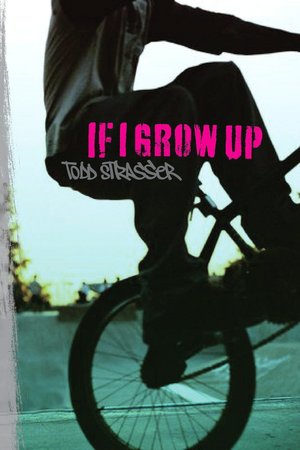
If I Grow Up by Todd Strasser
A Brief Summary
If I Grow Up follows the story of a young man named DeShawn who is growing up in the projects, starting when he is twelve years old and following him through the next ten years of his life. The story begins with DeShawn as a boy who lives in a neighborhood that is plagued with gang violence, poverty, and family problems ranging from teen pregnancy to deceased parents. It is hardly the ideal environment for a youngster and it only gets worse as violence in the area increases after the murder of a young child.
As the years pass the reader watches as DeShawn struggles to stay in school, support his grandmother and his sister, and still make a life for himself. He struggles constantly with not having enough food and clothes, with his young niece and his sister, with friends joining the local gang in order to look tough and make money, and all the problems that most everyone faces when growing up. The importance of a good education are constantly preached, but these promises never seem to compare to the money and power that comes with the gang lifestyle, and things get worse as DeShawn decides he can endure his place in life any more.
Thematic Elements
The events in If I Grow Up have a lot to do with themes of race, family, friends, power, and hopelessness. The book has a lot of interaction between family members and neighbors, who all cluster together for mutual support. Further, the book spends a large amount of time looking into the gang life and how the different elements relate to one another. Danger, loyalty, and betrayal are also common components of the second part of the book.
Analysis
This is a wonderful novel to assign to older students, preferably those in their junior or senior year of high school. Students reading this book need to be challenged to consider all of the things that have led to the violence and poverty that are so common to inner city America. They need to consider how the subject of race and class play into the situations of the characters and to understand that this is not just something that is happening in the book. The reality of the situation should be explored so that the book leaves a greater impact on the reader. DeShawn's choices are those that most students will never have to make, but this is a chance for them to consider what drove him to his decisions throughout the novel and to offer up what they might have done if they had been in his shoes.
A Little Something More
The best use of the novel is as a tool to show what life is like for those who do not have enough to survive. Themes of violence and poverty should be explored, as well as those of temptation, greed, and social and peer pressure. Take the time to converse with students about how they view gangs and the thug lifestyle versus how the book presents it. Ask them what sorts of things have contributed to their understanding of the subject—most will probably be quick to point out that rap videos and popular culture have glamorized the lifestyle compared the the gritty representation in Strasser's book. Have them do further research into the sorts of aid that impoverished families receive and what sorts of criticisms have been leveled against this aid.
For further reading, you can connect If I Grow Up with similar novels like Monster by Walter Dean Myers or Yummy: The Last Days of a Southside Shorty by G. Neri and Randy DaBurke. Have students compare the stories and look for similarities between the living conditions of the main characters and the way that they are treated by their fellows. Explore the idea of crime and why the main characters in texts are exposed to it and how it ultimately effects them. Further, have the students examine the ultimate fates of DeShawn and his friend Terrell. Ask them if they think that it was fair or if this was ultimately a happy ending.
Monster by Walter Dean Myers
A Brief Summary
Monster follows the story of Steve Harmon, an African American young man growing up in Harlem, New York. When the book opens, Steve has been charged as an accessory to armed robbery and for the murder of a local convenience store owner. Of course, he proclaims his innocence throughout the story, but it is never maid clear whether or not he was involved in the crimes being committed. Instead, the reader is left to listen to the account of the story, which is split into two very different styles, and come to their own conclusions. Often they must compare Steve to several other characters that are from his neighborhood, two of which are on trial for the same incident and seem much more likely for having committed the crime. While Steve is definitely not like the others, his guilt or innocence is never made to be a clear thing. The main draw of the book is that it not only puts the reader in the shoes of a young man of color, who is fighting for his life in a courtroom where the odds are stacked against him, but also because the reader is given the sense that they are a member of the jury and are responsible for deciding his innocence or guilt.
The book is split into two sections, the first being a screenplay-style account of the trial and the second being Steve's personal journal in which he explains what is going on while he is outside of the courtroom. The story weaves between the more personal journal entries and the matter-of-fact court proceedings as the story unfolds, with the reader put into a position of a fly on the wall. The reader is never just the impartial juror nor the young man on trial, but instead forced to inhabit both worlds. It clouds the issue and demands further thought, rather than blindly following either the facts as presented or the emotional appeals of the book's protagonist. This means that the reader has been put into an odd place, where emotion and reason war with one another.
Thematic Elements
Monster focuses heavily on the way in which people are biased even when they are told not to be, such as the jury on the case. Often there is a feeling of despair, that Steve has no hope of winning his case because of the people he is said to associate with and because of his race and where he lives. Further, there is the feeling of not knowing what the truth is and having to make the best guess. As likeable as Steve is as a character, as much as we sympathize with his struggle and his situation, there really is not a lot of evidence to prove his innocence or his guilt.
Analysis
The book itself is not really a difficult read, though it does take a little time to get used to the shifts in tone and font that the two styles use. Readers in eighth grade should have little trouble with reading the book, but even students in high school would still be challenged by the ambiguity of the events. There is a lot that can be done to focus readers on the prejudices at work in the story, the morality of what is going on in- and outside the courtroom, and about whether it matters that Steve is innocent or guilty with the way the evidence is presented. Whether focusing on a unit that has more to do with law or more to do with race, this is an excellent book for teachers to use in their classrooms.
A Little Something More
To help make the most of this book in class, teachers should construct and activity that puts their students into the shoes of Steve Harmon. Selecting three students, preferable two that are known for being a bit mischievous in class and a third who is quieter that the others, the three should be presented as having committed some sort of violation of school rules. One of the mischievous students is clearly presented as having been the ringleader of whatever happened, the second such student should be strongly associated with the first, and the third should be tenuously linked with the other two by circumstantial evidence. All three are to argue that they did not commit the crime and, in face, blame it the others. The class is to listen as they present their cases, with the teacher providing evidence that implicates all three of them but to varying degrees, and finally make a judgment who is really guilty.
The point of the exercise should not be whether or not a student is truly innocent of the crime that they are charged with, but in the way that the student is viewed by his or her classmates during the course of the trial. After the class has made their decision, they should not be given any sort of resolution as to “who dun it” and instead be asked to consider their feelings on the proceedings and how it mirrored the story. What is important here is the emotional resonance, especially with the students who were forced to defend themselves and blame their fellows. The class is to hear what each of their classmates were feeling while on trial or while deciding who was guilty. Have them explain why it was difficult or easy to come to their conclusions. Invite the students to explore why it was that it was not easy (or was!) to convict a student who was looking at severe punishment for their supposed actions. To add an extra layer of intensity, don't let the class know what is going on (except for the three who are on trial) and make it seem like the stakes are very very real.

An Introduction
Greetings and welcome to my little slice of cyberspace! My name is Liam Cassidy and I am a student of Metropolitan State College of Denver in Colorado. This blog was started to serve as my final project for Dr. Jill Adam's Young Adult Literature course, but it has grown and now serves as a guide for those out there who would like to analyze works of young adult literature. It is small, but all things must start so. You will forgive me if some of these sections focus on the class, but that was the inspiration for the blog and the catalyst for its creation, so I feel that I should give proper respect to the final project format while I work.
Over the course of the semester my class has covered quite a lot of ground and we have read through what feels like a lot of books, at least until you realize that each of them was one of several options on a list for that given week (averaging about three or four options each) and that they are just the smallest slice of the available works that could have been selected for our readings. In fact, that may have been one of the most important things that I learned over the course of the semester: The sheer size of the field and a respect for it works that it contains.
As some of you may be well aware of, young adult literature is not always the most well regarded field; when entering this class, I assumed it was the sort of writing meant only for kids who hadn't graduated high school yet. Over the course of the semester I have discovered some new favorite texts (The Perks of Being a Wallflower and Looking for Alaska, but more on those later.) that were surprisingly deep for what I assumed were books for kids. It also made me realize that I am slowly turning into the sort of adult I hated as a kid: The kind that underestimates what kids know and can comprehend.
So with that in mind, I thought I would try to discuss what it was I liked about the books and assignments that I have contended with over the semester. Seeing as there was not a bad book in the lot, I have tried to focus on the use of the books in the classroom rather than if they were good or not. Besides, notions of good and bad literature are highly subjective, especially for those of us who have long been exposed to the sorts of reading that is only common in college.
While you are going through the blog, you will be starting with a rundown of the books that I read over the course of the semester and then proceed to a discussion of the various major projects (and how you might adapt them for your own classes!) before finally touching on our textbooks and what was good about them. Feel free to peruse the blog and snatch up anything that you like, as that is part of the purpose. I have learned a lot through the course of the semester and I would like to have a place for that knowledge to be picked up by others. One quick note: don't bother paying attention to the dates for those things posted on December 12, 2011. These were arranged in order by manipulating the times that they were posted to keep the intended order of the table of contents intact.
I invite all readers to go through the blog and read what I have written and, if they find something they feel they need to add, then to make a comment on the section; why else make use of the blog format if it is not going to be used to the fullest, am I right?
The Books
Monster by Walter Dean Myers
Looking for Alaska by John Green
If I Grow Up by Todd Strasser
Perks of Being a Wallflower by Stephen Chbosky
The Book Thief by Markus Zusak
The Graveyard Book by Neil Gaiman and Dave Mckean
The Lightning Thief by Rick Riordan
Sold by Patricia McCormick
Little Brother by Cory Doctorow
Maus by Art Spiegelman
The Invention of Hugo Cabret by Brian Selznick
Subscribe to:
Posts (Atom)